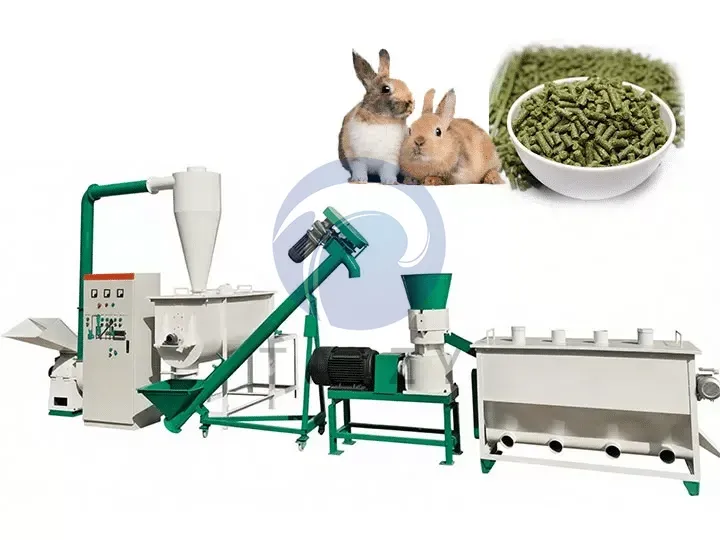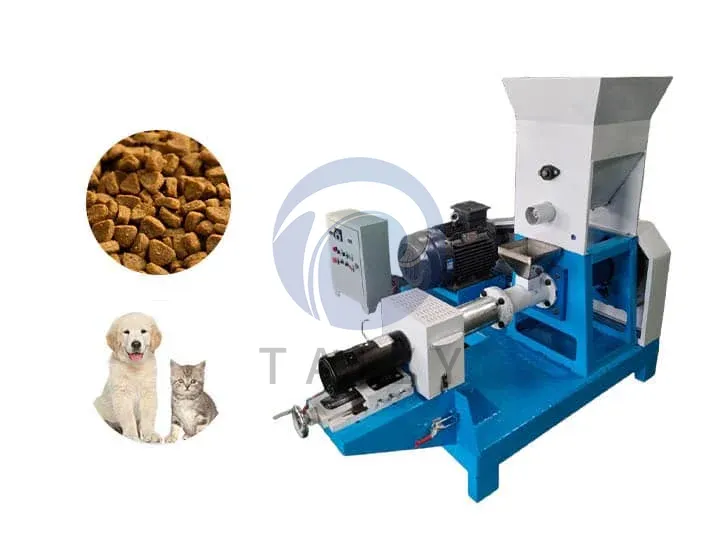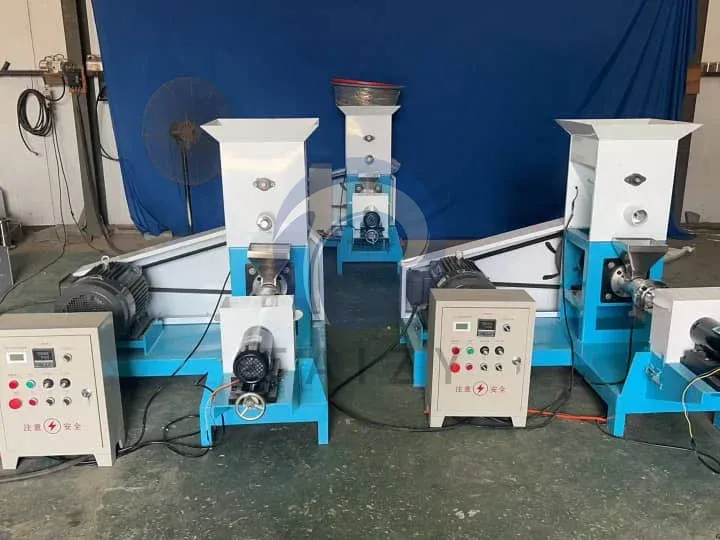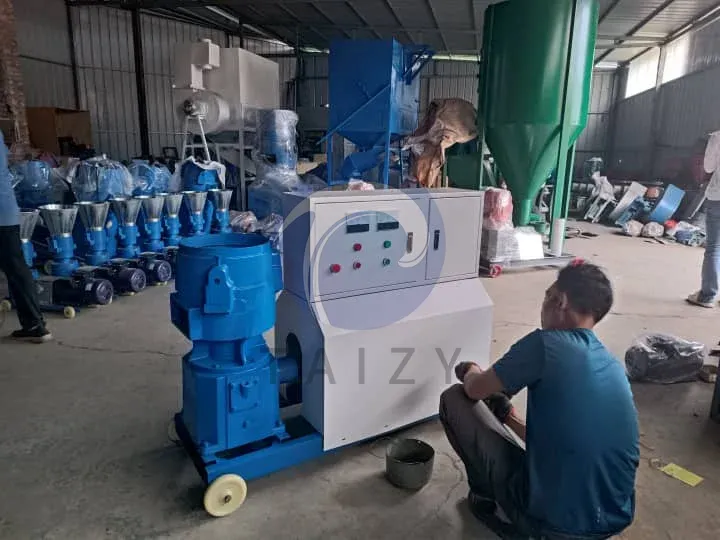
How the Vietnam Aquaculture Cooperative built a versatile feed production facility serving 150+ smallholder farmers with customised feed for catfish, shrimp, and tilapia. Taizy provides detailed aquatic feed production line solutions.
Project Overview
| Location | Vietnam |
| Client | Vietnam Local Aquaculture Cooperative |
| Installation Date | August – October 2025 |
| Equipment | 2TPH Complete Aquatic Feed Production Line |
| Factory Area | 1,800 square meters |
| Total Investment | $125,000 USD |
This comprehensive case study documents the installation of a versatile aquatic feed production line in Vietnam’s Vietnam region. The project demonstrates how cooperative models can enable smallholder farmers to access advanced feed technology, reduce costs, and improve competitiveness in the global aquaculture market.
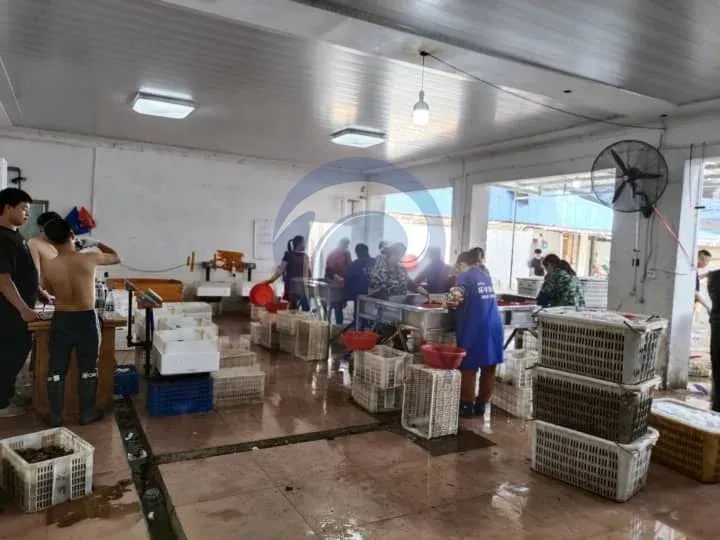
Client Background: Vietnam Aquaculture Cooperative
The Aquaculture Cooperative was established in 2020 as a farmer-owned organisation to improve the collective bargaining power and operational efficiency of small-scale aquaculture producers in this region. The cooperative now comprises 152 member farms.
Cooperative Scale
- Member farms: 152 smallholder aquaculture farmers
- Total pond area: 485 hectares across member farms
- Annual production: 12,500 tons of various aquatic species
- Main species: Pangasius catfish (55%), Shrimp (25%), Tilapia (15%), Others (5%)
- Export markets: EU, USA, Japan, China, ASEAN countries
- Annual revenue: $28 million USD (combined member production)
“Individual small farmers cannot compete with large companies on feed costs. By pooling our resources and producing feed collectively, we’ve leveled the playing field. Our members now pay 35% less for feed while receiving higher-quality feed. This cooperative model is transforming livelihoods.”
— Nguyen Van Minh, Cooperative Chairman
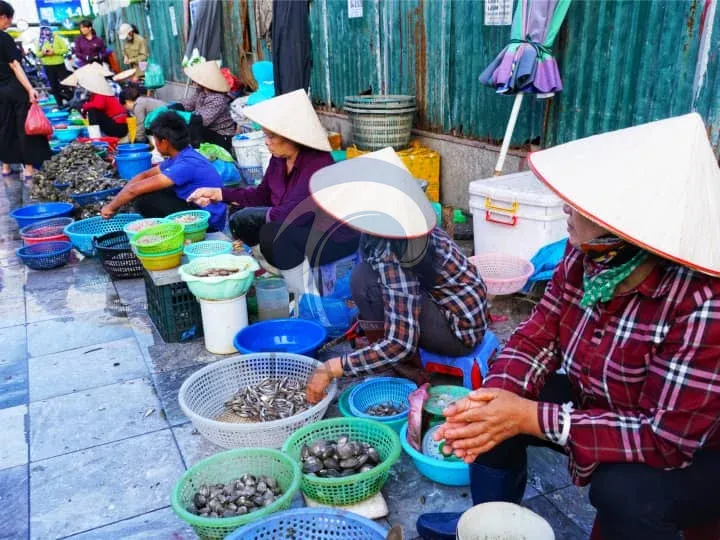
Business Challenge: Fragmented Feed Procurement
Before establishing the cooperative feed mill, members of the organisation faced multiple challenges that reduced profitability and market competitiveness.
| Problem | Impact on Farmers | Collective Annual Loss |
| High feed prices | Paid retail prices, no volume discount | $2.8 million excess cost |
| Inconsistent quality | Variable FCR, unpredictable growth | $1.2 million reduced yields |
| Limited feed options | Cannot customise for specific species | Suboptimal production |
| Credit dependency | Forced to buy feed on credit from traders | 15-20% interest costs |
| Supply disruptions | Feed shortages during peak season | Delayed harvests |
Total collective loss: Approximately $4.5 million USD annually across 152 member farms.
Cooperative Feed Production Model
The cooperative decided to invest in a shared feed production facility that could serve all member farms with customised, high-quality feed at significantly lower costs.
| Requirement | Solution | Benefit |
| Multiple species feed | Twin screw extruder + pellet mill | Flexibility for floating and sinking feed |
| Variable capacity needs | 2 TPH base capacity, expandable | Matches current demand, room to grow |
| Quality consistency | Automated batching and mixing | Precise formulations, uniform quality |
| Cost effectiveness | Shared ownership model | Spread investment across 152 farms |
| Technical expertise | Hire dedicated feed mill staff | Professional operation, consistent quality |
Complete Production Line Configuration
The aquatic feed production line was designed to produce both floating and sinking feed for multiple species, with flexibility to switch between product types efficiently.
Line Configuration Overview
- Raw material receiving and cleaning system
- Grinding system (hammer mill, 45 kW)
- Weighing and batching system (6-ingredient scale)
- Mixing system (twin-shaft paddle mixer, 1000 kg/batch)
- Conditioning system (steam conditioner)
- Extrusion system (twin screw extruder, 75 kW)
- Drying system (3-layer dryer, 45 kW)
- Flavouring system (rotary coater)
- Cooling system (counter-flow cooler)
- Screening and packaging system
- Pneumatic conveying system
- Electrical control system (PLC with touchscreen)
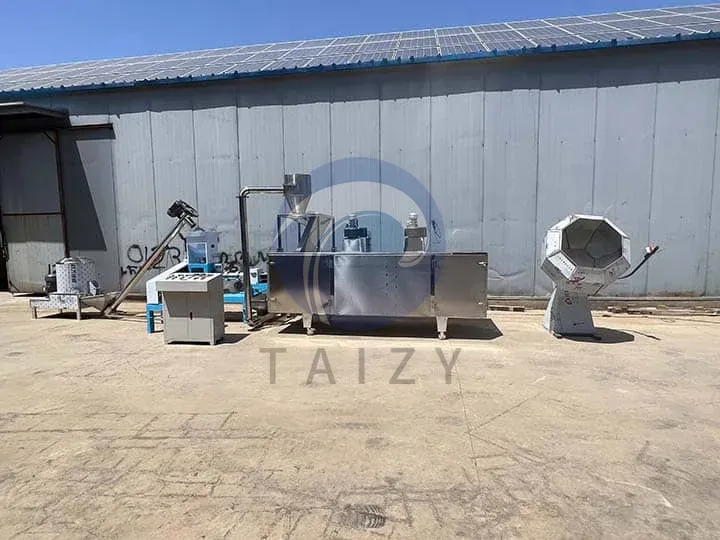
Factory Layout and Infrastructure
The feed mill facility was designed for efficient material flow, food safety compliance, and future expansion.
| Area | Size (sq m) | Function | Special Features |
| Raw material warehouse | 420 | Storage of ingredients | Raised floor, moisture control |
| Grinding and mixing area | 180 | Size reduction and blending | Dust collection system |
| Extrusion and drying area | 320 | Core processing | Ventilation and heat extraction |
| Cooling and packaging area | 160 | Product finishing | Hygienic design |
| Finished goods warehouse | 520 | Feed storage | Pallet racking, FIFO system |
| Quality control lab | 80 | Testing and analysis | Basic equipment |
| Utilities and office | 120 | Boiler, compressor, admin | Separate access |
Material Flow Design
The facility follows a linear flow pattern to minimise cross-contamination and optimise efficiency:
- Raw materials: Enter from east gate → warehouse → grinding/mixing
- Processing: Mixing → conditioning → extrusion/pelleting → drying
- Finishing: Cooling → screening → packaging → quality check
- Distribution: Finished goods warehouse → west gate loading
Key Success Factors
This project’s success demonstrates critical principles for cooperative agricultural development:
- Collective action: Pooling resources enables economies of scale
- Professional management: Hire skilled staff, not just member farmers
- Quality focus: Consistent quality builds member trust and loyalty
- Transparent governance: Regular financial reporting to all members
- Technical support: Provide ongoing training and farm assistance
- Government partnership: Leverage policy support and subsidies
- Reinvestment: Build reserves for maintenance and expansion
Conclusion
The installation of a complete aquatic feed production line by the Aquaculture Cooperative demonstrates the transformative potential of cooperative models for smallholder farmer development. With feed costs reduced by 36%, FCR improved by 10.3%, and a collective annual benefit of $4.4 million USD across 152 member farms, the project has exceeded all expectations.
The cooperative’s achievement of producing high-quality, species-specific feed at 35% below commercial prices proves that smallholder farmers can compete effectively when they work together. The 5.3-month payback period at the cooperative level—and just 10 days per member farm—makes a compelling case for replication.