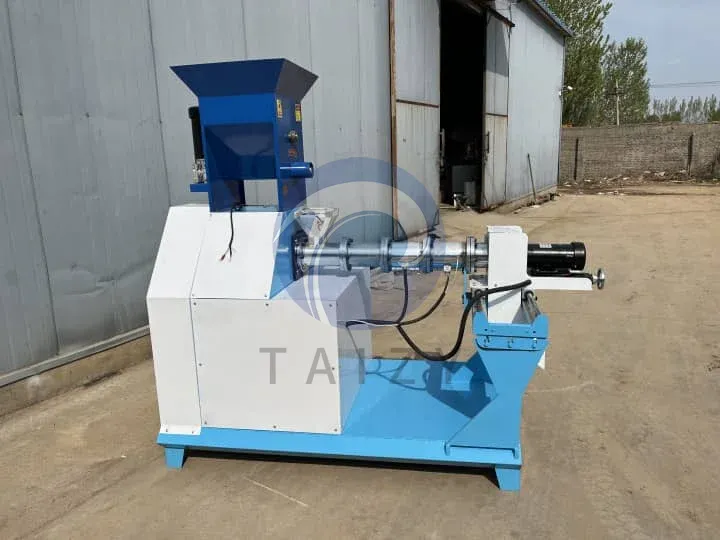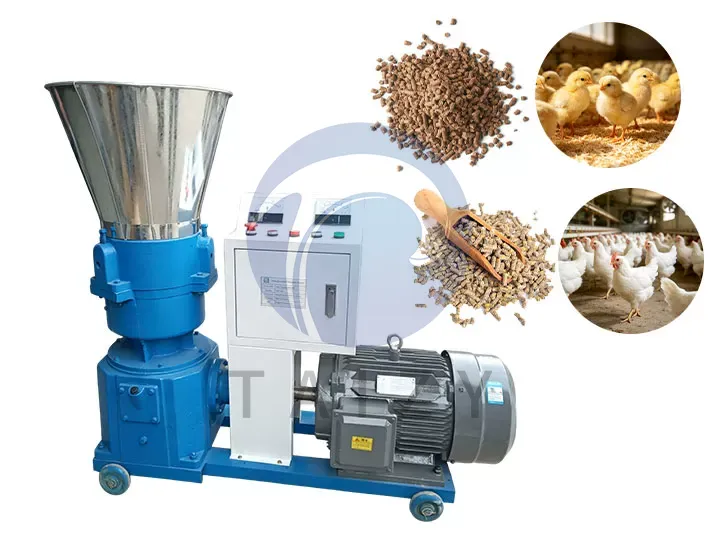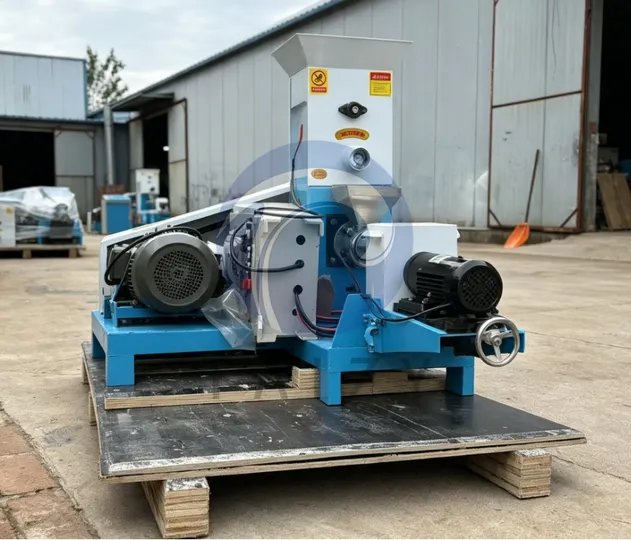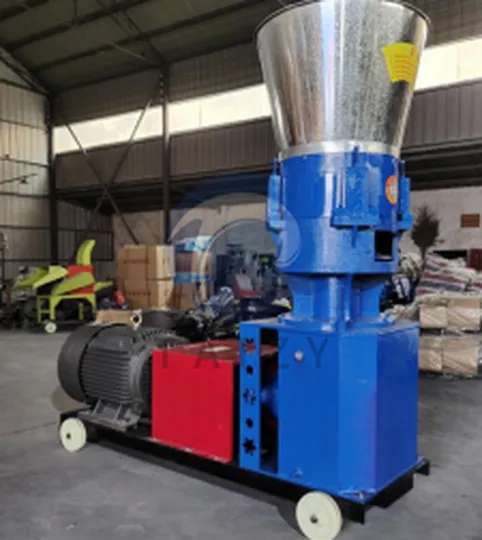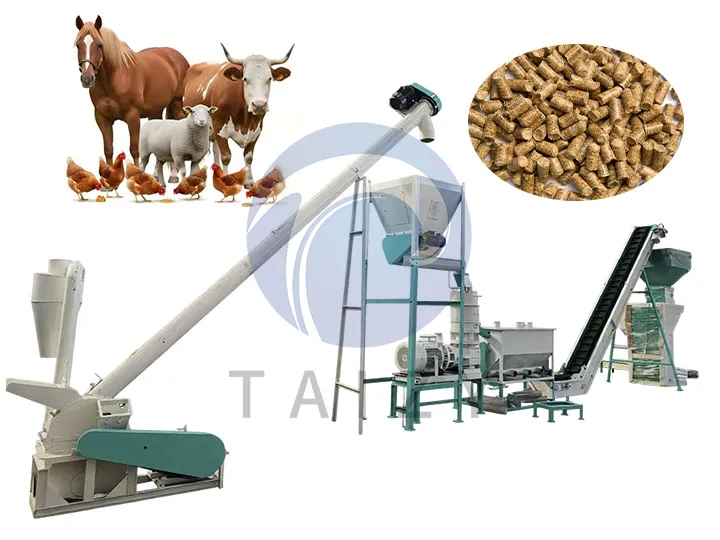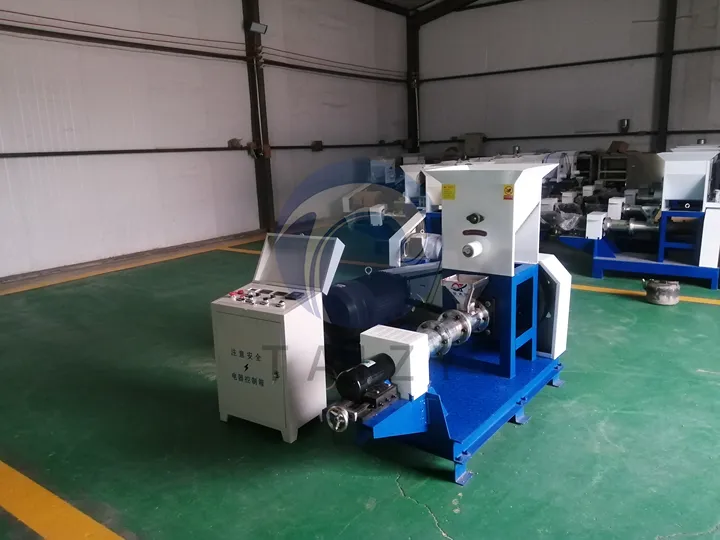
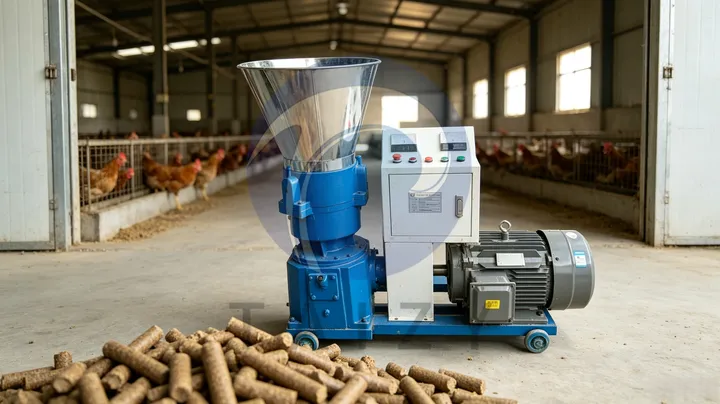
More and more farmers are starting to use chicken feed pellet making machines to make their own feed. For poultry farmers, rising feed costs quickly translate into higher production expenses. At the same time, relying entirely on commercial feed can limit a farmer’s control over feed ingredients and formulations.
Farmers directly purchase raw materials such as corn, soybean meal, and wheat bran, and formulate formulas according to their needs. This not only saves them from the intermediate markup of finished feed and reduces their investment in farming, but also avoids poultry being picky eaters and reduces feed spillage and waste.
Reasons for Poultry Farmers to Select Chicken Feed Pellet Making Machine
Customizable Feed Formulas with Ingredient Quality Control
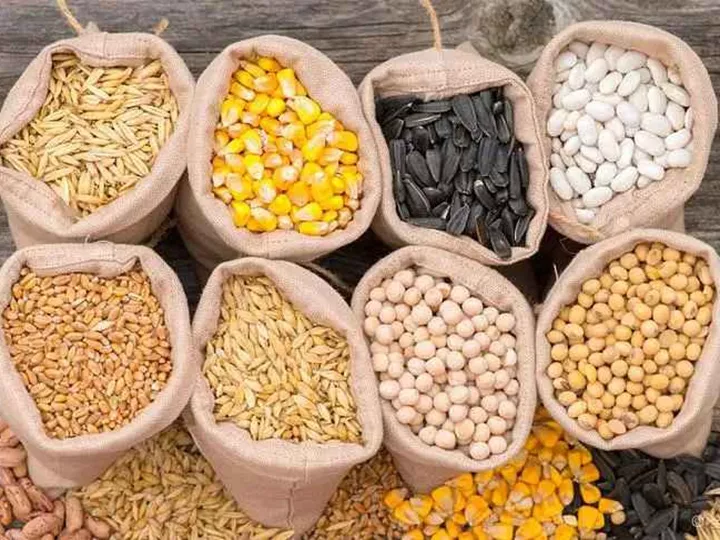
With a pellet machine, farmers can freely mix ingredients—such as corn, soybean meal, wheat bran, rice bran, crop stalks, and peanut vines—to suit the specific growth stages of chicks, broilers, and laying hens.
Protein and energy ratios can be flexibly adjusted. By sourcing and selecting ingredients personally, farmers can verify quality and mitigate the risks associated with inferior commercial feeds.
Significant Savings on Feed Costs
On the one hand, farmers can purchase bulk ingredients like corn and soybean meal for on-site processing, eliminating intermediate costs such as factory processing, packaging, and distributor markups.
On the other hand, pelleted feed prevents the waste caused by chickens scratching and scattering their food. Agricultural byproducts such as crop straw and rice seedlings can also be recycled and used as feed, further reducing breeding costs.
Prevents Selective Feeding and Promotes Uniform Growth
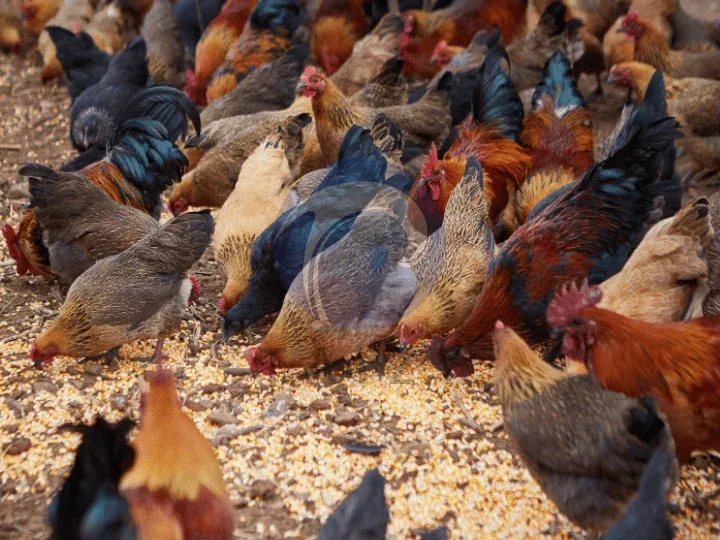
In homemade pellets, all ingredients are thoroughly mixed into every single granule, making it impossible for chickens to pick out preferred grains while discarding bran or supplements; this ensures balanced nutrition for every bird.
Chicken feed made with a chicken feed pellet making machine can prevent some chickens from growing rapidly due to sufficient nutrition, while others become weak or stunted due to malnutrition. The entire flock will be slaughtered at a uniform weight, thus improving overall farming efficiency.
Extrusion and Gelatinization Improve Digestion and Reduce Disease
The high temperatures generated during feed pelleting and extrusion gelatinize the starch, making it easier for chickens to digest and improving the feed conversion ratio. At the same time, high temperatures can kill most of the insect eggs and some pathogens in the raw materials, reducing the occurrence of intestinal diseases.
Compared to powder feed, pelleted feed produces less dust, reducing dust levels in the coop and thus decreasing the incidence of respiratory diseases in chickens, thereby reducing the need for veterinary drugs.
Easier Storage and Handling
Pulverized and mixed feed powders are bulky and prone to absorbing moisture, clumping, and molding. After being processed into pellets, the feed density increases; it takes up less space, has a lower moisture content, and is less prone to moisture absorption and spoilage when stored in an airtight container, resulting in a longer storage period.
Pelleted feed is easier to handle and feed, and it can also be adapted to automatic feeding lines and troughs, reducing the workload of manual feeding
Purchase
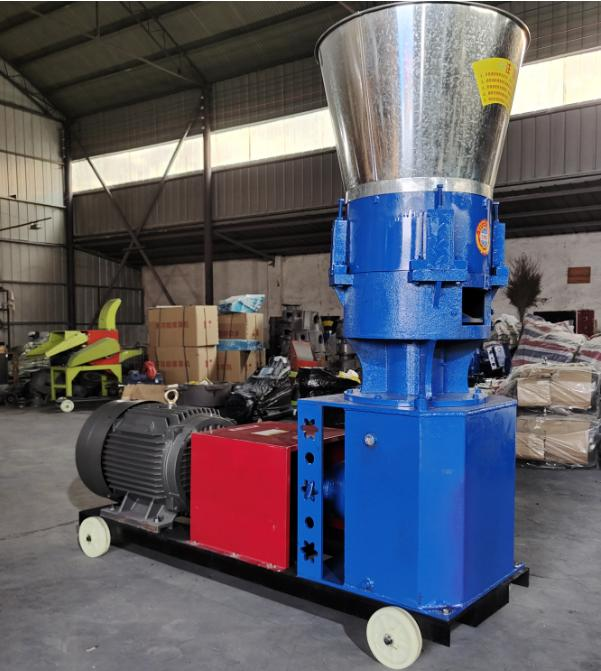
我们的 鸡饲料颗粒机 can easily process feed for poultry—such as broilers, laying hens, ducks, and geese—as well as for livestock like rabbits, cattle, and sheep. Please feel free to contact us if you have any needs in this area.