
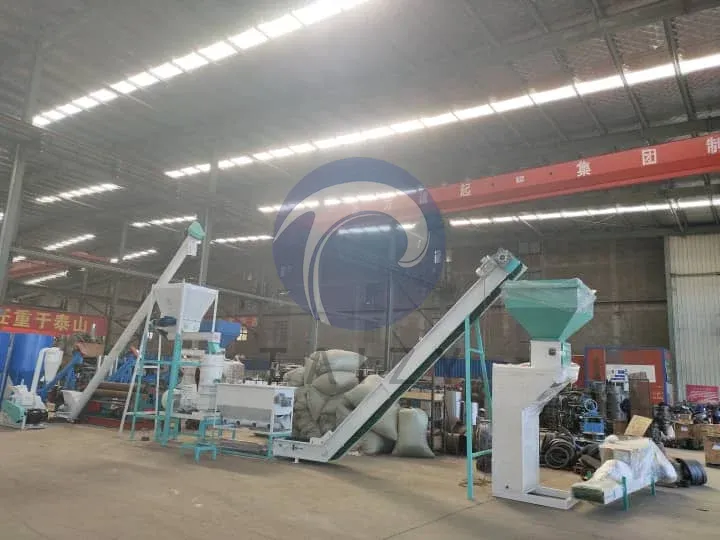
An innovative agro-processing company in Côte d’Ivoire successfully transformed cocoa husk waste into valuable biomass fuel pellets using an advanced biomass pellet machine.
This comprehensive case study documents how agricultural waste conversion created a profitable circular economy business while addressing environmental challenges in the world’s largest cocoa-producing nation.
Côte d’Ivoire’s Cocoa Industry and Waste Challenge
Côte d’Ivoire is the world’s largest cocoa producer, accounting for 40% of global cocoa production. In 2025, the country produced 2.2 million tons of cocoa beans, generating approximately 4.4 million tons of cocoa husk waste (cocoa pods represent about 80% of fresh pod weight).
A 52-year-old agro-industrial entrepreneur from Abidjan had been operating a cocoa processing facility for 15 years. Facing increasing environmental regulations and waste disposal costs, he sought a sustainable solution to convert cocoa husk waste into valuable products.


Cocoa Husk Waste Challenges
- Massive waste volume: 4.4 million tons of cocoa husk generated annually in Côte d’Ivoire
- Disposal costs: 35,000-50,000 XOF per ton for waste removal and landfill fees
- Environmental impact: Decomposing husks release methane (25x more potent than CO₂)
- Pest attraction: Waste piles attract rodents and insects, spreading disease
- Water pollution: Rainwater runoff from waste piles contaminates water sources
- Missed opportunity: Cocoa husk has high calorific value (4,200-4,500 kcal/kg)
“We were paying fortunes to dispose of cocoa husks,” explained our customer. “The waste was piling up, creating environmental problems, and costing us money. I knew there had to be a better way to handle this biomass. Converting waste into energy seemed like the perfect solution.”

The Solution: Biomass Pellet Production from Cocoa Husk
After extensive research on biomass utilization and consultations with Taizy Machinery’s renewable energy specialists, he invested in a complete biomass pellet production line designed specifically for cocoa husk processing.
Why Cocoa Husk Pellets?
| Property | Cocoa Husk Pellets | Wood Pellets | Coal |
|---|---|---|---|
| Calorific Value | 4,200-4,500 kcal/kg | 4,000-4,300 kcal/kg | 5,500-6,500 kcal/kg |
| Moisture Content | 8-10% | 8-10% | 10-15% |
| Ash Content | 3-5% | 1-3% | 10-30% |
| Sulfur Content | 0.1-0.2% | 0.05-0.1% | 0.5-2.0% |
| CO₂ Emissions | Carbon neutral | Carbon neutral | High |
| Cost (per ton) | $120-150 | $180-220 | $100-130 |
| Equipment | Model | Capacity | Power |
|---|---|---|---|
| Hammer mill crusher | TZ-HM650 | 800-1000 kg/h | 22 kW |
| Rotary dryer | TZ-RD600 | 1 TPH | 15 kW |
| Biomass pellet mill | TZ-PL550 | 1000-1200 kg/h | 90 kW |
| Pellet cooler | TZ-CL500 | 1 TPH | 5.5 kW |
| Vibrating sifter | TZ-SF80 | 1 TPH | 1.5 kW |
| Belt conveyor | TZ-SC500 | 1 TPH | 3 kW |
| Electrical control panel | TZ-CP1000 | – | – |
| Shipping (CIF Abidjan) | Complete set | – | – |
| Equipment subtotal | – | – | 139 kW |
| Shipping (CIF abidjan) | – | – | – |
| Installation & training | – | – | – |
| Total investment | – | – | – |

Cocoa Husk Pellet Production Process
The biomass pellet production line converts raw cocoa husk into dense, uniform fuel pellets through a series of processing steps.
Production Process Steps
- Raw material collection: Cocoa husks collected from processing facilities (moisture 45-55%)
- Crushing: Hammer mill reduces husk to 3-5mm particle size
- Drying: Rotary dryer reduces moisture from 45% to 10-12%
- Pelleting: Pellet mill compresses material through a 6mm or 8mm die at high pressure and temperature
- Cooling: Cooler reduces pellet temperature from 80-90°C to ambient +5°C
- Sifting: Vibrating sifter removes fines and oversize particles
- Packaging: Finished pellets bagged in 15kg or 25kg bags
| Parameter | Value |
|---|---|
| Raw material moisture (input) | 45-55% |
| Dried material moisture | 10-12% |
| Pellet diameter | 6mm, 8mm (optional 10mm) |
| Pellet length | 10-30mm (adjustable) |
| Pellet density | 1.1-1.3 g/cm³ |
| Pellet durability | ≥95% |
| Production temperature | 80-90°C (natural lignin activation) |
| Hourly capacity | 1,000-1,200 kg/h |
| Daily production (8 hours) | 8-9.6 tons |
| Monthly production (26 days) | 208-250 tons |

Market Applications and Sales
Cocoa husk biomass pellets have multiple market applications in Côte d’Ivoire and the broader West African region.
Primary Market Segments
- Industrial boilers: Textile factories, food processing plants, palm oil mills (60% of sales)
- Commercial heating: Hotels, hospitals, schools with central heating systems (20%)
- Brick kilns: Ceramic and brick manufacturers replacing firewood (10%)
- Export market: European biomass power plants (10%)
Environmental and Social Impact
Beyond financial returns, the biomass pellet project delivers significant environmental and social benefits.
Environmental Benefits (Annual)
- Waste diverted from landfill: 3,300 tons of cocoa husk
- Methane emissions avoided: 825 tons CO₂ equivalent
- Firewood saved: 2,100 tons (reduces deforestation)
- CO₂ reduction vs coal: 2,640 tons
- Carbon-neutral energy: Biomass absorbs CO₂ during growth
- Water pollution prevented: No runoff from waste piles
Social Benefits
- Job creation: 8 direct jobs + 15 indirect jobs
- Skills development: Workers trained in renewable energy technology
- Local energy security: Reduced dependency on imported fossil fuels
- Community health: Less air pollution compared to coal/firewood
- Economic development: New revenue stream for the cocoa industry
Customer Testimonial
“This biomass pellet project transformed our waste problem into a profitable business. We’re no longer paying for waste disposal—instead, we’re earning revenue from what was once garbage. The pellets are high quality, customers love them, and we’re making a positive environmental impact. The Taizy team provided world-class equipment and support. This is a perfect example of circular economy in action. We’re now planning to expand capacity and process waste from other cocoa processors.”
— CEO, Biomass Energy Company, San-Pédro, Côte d’Ivoire
Conclusion: Leading West Africa’s Biomass Revolution
This energy company’s success demonstrates that agricultural waste-to-energy conversion is a profitable and sustainable business model in West Africa. The biomass pellet machine system delivered a strong ROI in under 7 months while addressing environmental challenges and generating clean, renewable energy.
Given Africa’s enormous agricultural biomass resources (estimated at 700 million tons annually) and growing energy demand, biomass pellet production presents a significant opportunity. Whether you’re processing cocoa husk, rice husk, sawdust, or crop residues, Taizy Machinery has the expertise and equipment to make your biomass energy project successful.

Ready to Start Your Biomass Pellet Business?
Contact Taizy Machinery today for a free consultation and customized production line proposal. We’ll help you design the perfect solution for your raw materials and market.